

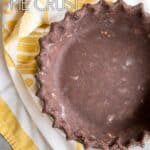
This homemade Chocolate Pie Crust is the chocolate version of my go to all-butter pie crust. It is very easy to make, with ingredients that you most likely already have on hand. It can be used for traditional single-crust or double-crust pies, and all the hand pies you can dream up.

A homemade pie crust is the secret weapon to the most delicious pies! It seems easier to opt for a store bought crust to save time, but homemade crust is far more superior and actually very easy to make. It adds even more chocolate flavor to my French silk pie recipe!
This Chocolate Pie Crust recipe is very simple and versatile. It is the chocolate version of an all-butter pie crust that can be used in just about any pie recipe. You will need to bake this chocolate crust, if you’re looking for a no bake version, try this Oreo pie crust.
Table of Contents
Ingredients and Substitutions
There are just 6 ingredients needed to make this chocolate pie crust including water and salt!
As always, you’ll find the complete list of ingredients and quantities in the recipe card at the end of this post. Below are some notes and substitution tips:
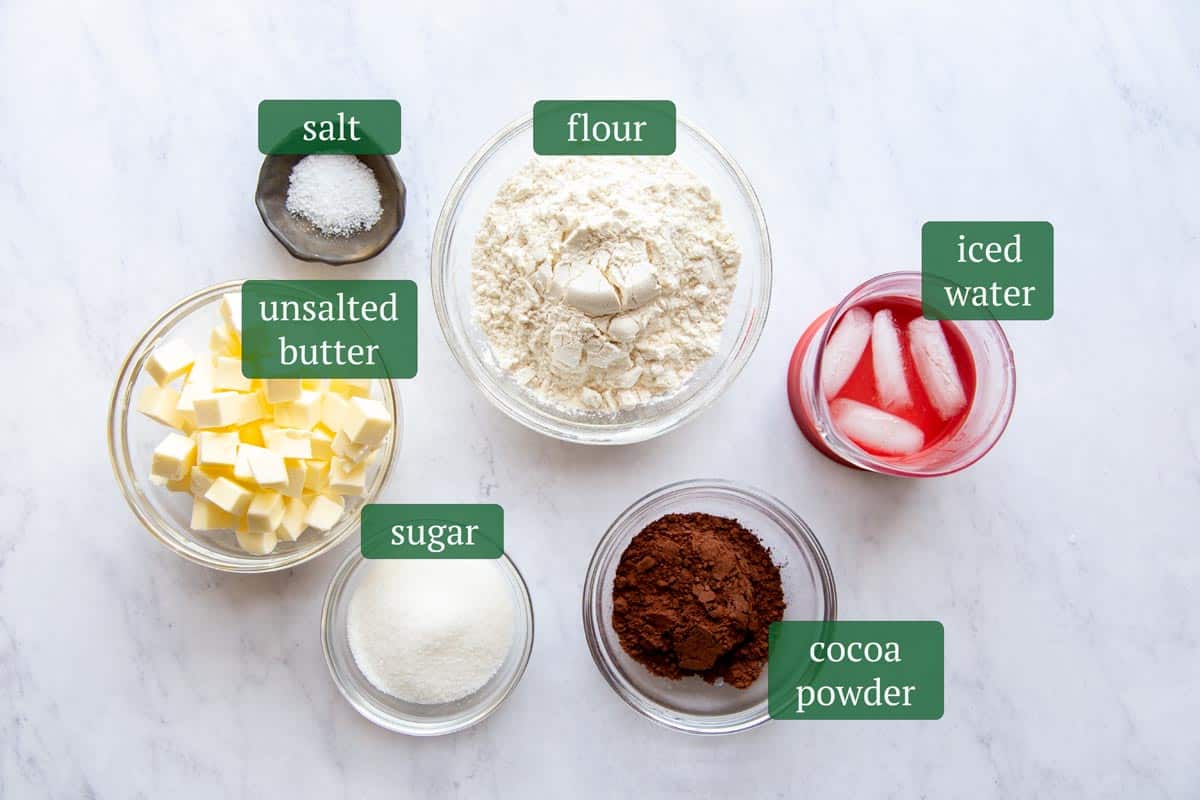
- Flour – I use all-purpose flour for all of my recipes but for a pie crust or any pastry recipe, you could use pastry flour if you wish.
- Cocoa powder – I use cocoa powder to add chocolate flavor in my homemade chocolate pie crust. You can use either natural cocoa powder or Dutch-processed cocoa powder, but note that the latter will give a deeper chocolate flavor. To enhance chocolate flavor ever further, you can add instant coffee or instant espresso powder.
- Sugar – I like my pie crust on the sweeter side and because the cocoa powder adds some bitterness to the pie crust, I used ¼ cup of granulated sugar to sweeten this chocolate pie crust.
- Butter – unsalted butter is used. Make sure it is cold.
- Salt – a little bit of kosher salt is used to enhance flavor.
- Water – use iced water to hydrate the pie dough and to bring it all together. You want to make sure it is cold so the butter doesn’t melt. Also, make sure you don’t use too much water or the dough will become too soft and sticky. You could use some type of alcohol, such as vodka, to replace some or all of the water. Alcohol inhibits gluten formation and will create a flakier crust in the end.
How to make Chocolate Pie Crust
The following instructions, step-by-step photos, and tips are here to help you visualize how to make the recipe. You can always skip straight to the printable recipe card at the end of this post.
Processing the ingredients
Mix or sift the cocoa powder together with flour, sugar and salt before adding butter. I do this in a separate mixing bowl before transferring to a food processor to ensure the dry ingredients are distributed evenly.
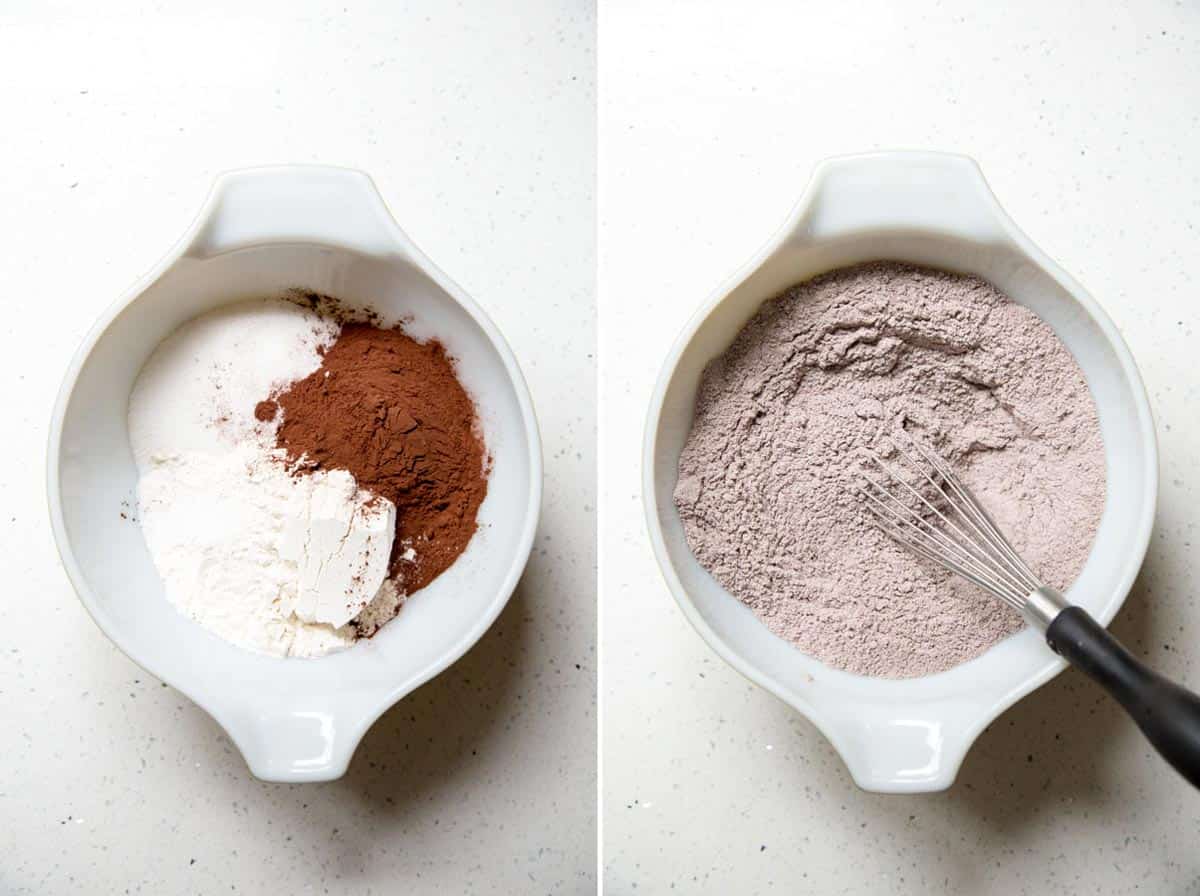
Note: if using a food processor or stand mixer, you could let the machine do this step for you but I find that mixing by hand gives a more even mix.
Add cubed, cold butter straight from the refrigerator to the flour mixture in your food processor fitted with the plastic dough blade. Pulse to mix until butter pieces are no smaller than pea and bean size.

Drizzle in cold water while mixing. Check the pie dough by grabbing a chunk of dough with your fingers and press it together. If it holds, it is ready.

Note: The recipe calls for 4 to 6 tablespoons of water, but add only as much water as needed to get the dough to form. The water quantity is slightly more than needed for the regular pie dough due to the addition of cocoa powder.
Forming the dough
Line your cutting board/counter with a piece of plastic wrap and dump the dough on to the plastic wrap. Use the plastic wrap to gather the dough into a ball and shape it into a disk.

Tip: Using plastic wrap to form the dough will prevent the need to add extra flour in this step.
Now let it rest at least one hour in the fridge or overnight if you are preparing your pie crust ahead.
Forming the pie crust or shapes
When you’re ready to make the pie crust, take the dough out of the fridge and roll it into a circle about 2” larger than your pie dish.
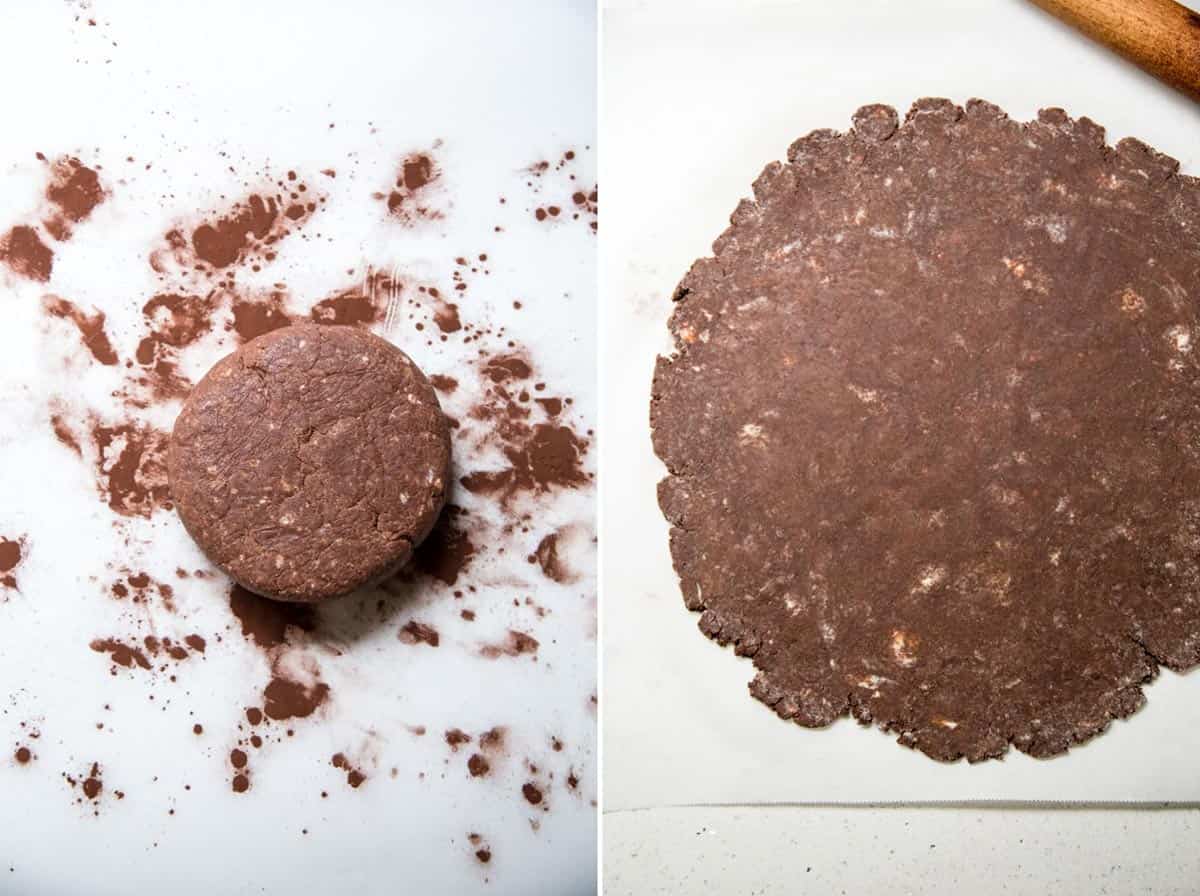
Tip: Use flour, cocoa powder, or a mixture of flour and cocoa powder to keep the dough from sticking to the counter when rolling. Rolling on parchment paper could also help.
Place the pie dough into the pie dish and trim off the excess, leaving a bit of dough hanging over the side. Flute the edges to form a decorative rim.

Tip: To transfer the sheet of pie dough onto the pie dish, you’ll want to roll it up onto your rolling pin. For this step, it is useful to have a longer French style rolling pin. Place the rolled up pie dough over your pie dish and unroll it to cover the dish. If you roll out the dough on a piece of parchment paper, you can simply flip it over the pie plate.
Once you form the pie crust in the pie plate, you can freeze it quickly before baking or store it in the freezer until you are ready to use it. You can use this chocolate pie dough in any pie recipes that call for homemade pie dough. Just bake it according to the recipe instructions.
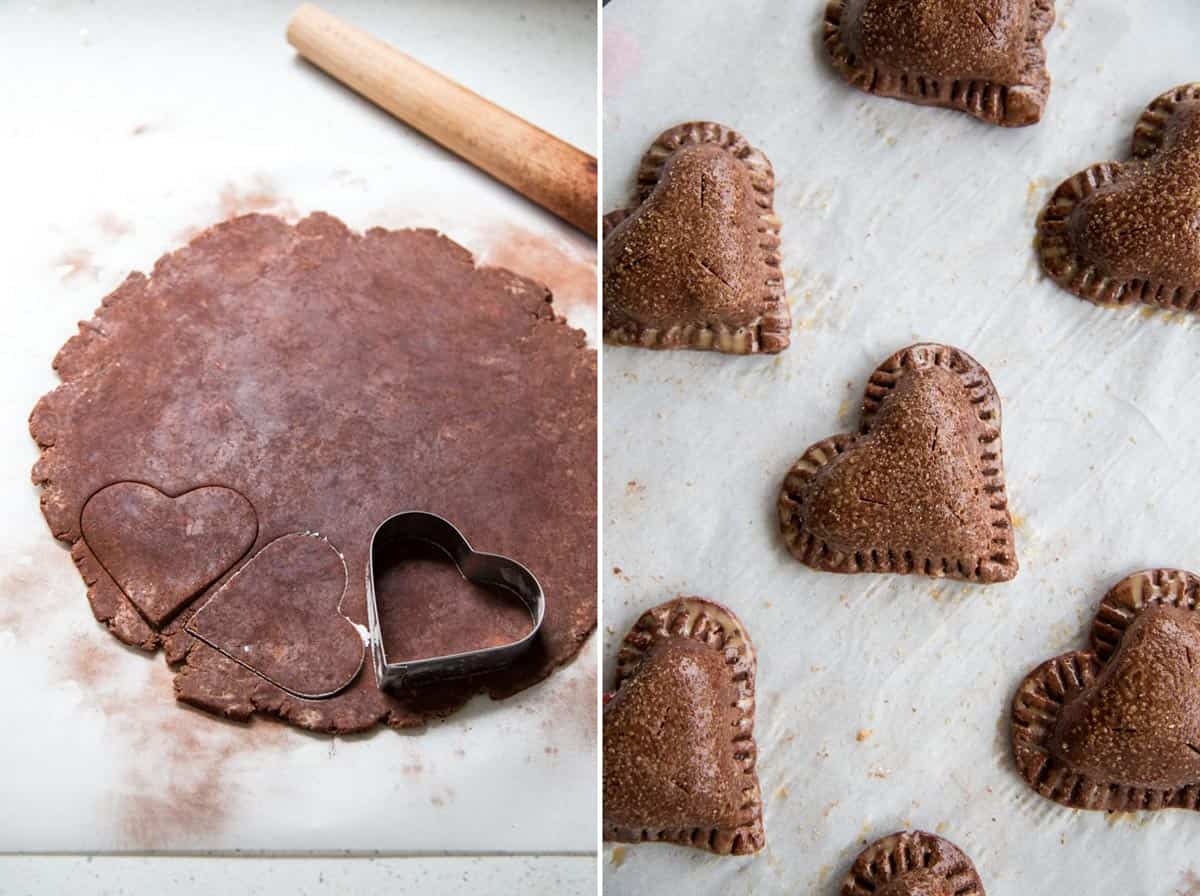
Alternatively, you can roll the dough out between ⅛” to ¼” and cut it into any shape you wish. Use it for hand pies, pop tarts, and so many other delicious treats.
Par baking or blind baking
If you’re using this pie dough with a custard type filling like a pumpkin pie, you will need to par bake it first before adding the filling to prevent the crust from going soggy. To par bake:
- Dock the crust, or poke the bottom and side of the pie crust using a fork.
- Line the crust with parchment paper and pie weights. Tip: I use dry beans. Bake for 20-25 minutes at 425°F with the weights.
- Remove pie weights and add filling, continue to bake according to the recipe instructions.

If you’re making a pie with no bake filling or a cream filling, you will need to blind bake the crust. The process is exactly the same as par-baking but once you remove the pie weights, you will continue to bake the crust for 5-10 minutes longer to completely cook it.
Note: when blind-baking without the parchment paper and pie weights, make sure to cover the edges of the crust with a pie shield to avoid burning the edges. I usually use thin strips of foil as a pie shield.
How to tell when your pie crust is done baking
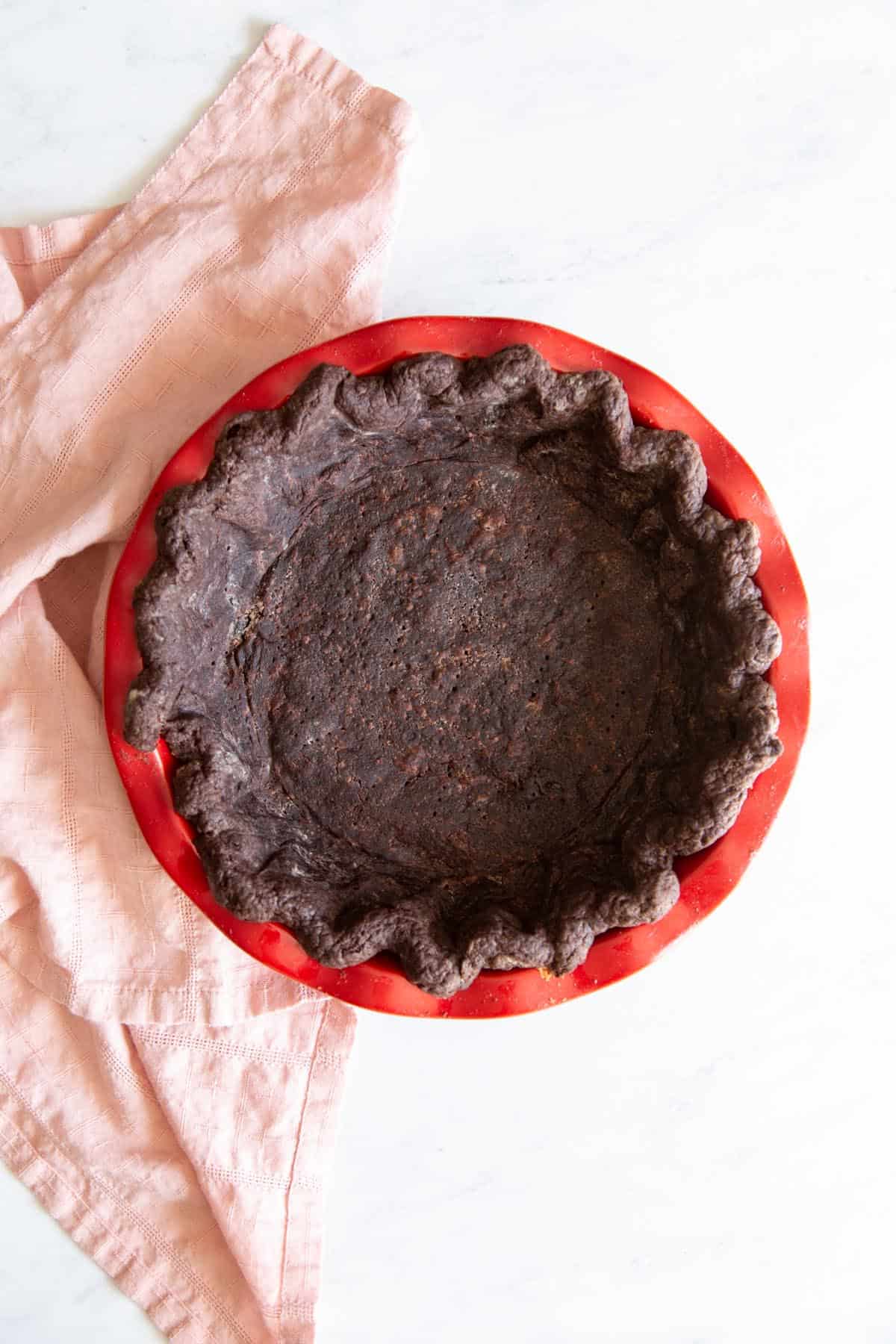
Because this pie crust is darker in color, you won’t be able to see when it turns “golden brown” like a regular pie crust. To tell whether it is done when blind-baking, check to see if the surface of the crust is dry. Once dry, it is done.
Make it without a food processor
Yes, absolutely! You can make this pie dough by hand or using a stand mixer if you don’t have a food processor.
Make this by hand:
- Use a pastry cutter or a fork to cut the butter into the flour mixture, or simply use the tips of your fingers to press the butter into the flour mixture the way you would when making scones.
- Then sprinkle in iced water and press the dough together to form a ball.
- Flatten into a disk, wrap in plastic and refrigerate.
Make this using a stand mixer:
- use the paddle attachment to beat the butter into the flour mixture until evenly distributed.
- Then drizzle in iced water and mix on low speed until the dough starts to pull together.
- Turn out on a piece of plastic wrap and gather into a ball, then flatten into a disk, wrap it up and refrigerate.
If you want to see process photos of these two methods, check out the post for my all-butter pie crust. There are detailed instructions and step by step photos.
Which is the best method?
I made this pie dough using all three methods for comparison. As you can see from the photo below, the chocolate pie crust made by hand is the flakiest, followed by the one made using the stand mixer and then food processor.

I’ve always made mine using a food processor just because it’s very quick and easy. But in all honesty, the other methods are easy as well. So take your pick and make it whichever way you’re comfortable with.
Storage
You can keep premade pie dough in the refrigerator for up to a week, or in the freezer for several months.
When freezing pie dough, make sure to double wrap and put it in a freezer bag as well to prevent the dough from absorbing funky freezer odor. You will need to thaw the dough before using.
I also like to shape the pie dough in the pie dish ahead of time and pop it in the freezer. It is best to use a metal pie dish if you’re planning to bake directly from the freezer.
I used to keep my ceramic pie dishes in the freezer and they started to show cracking, most likely from extreme temperature change from freezer to oven.
Another tip is to shape the dough in a pie dish, give it a good freeze, then pop the whole thing out of the dish and wrap it really well for safekeeping until you need to bake it.
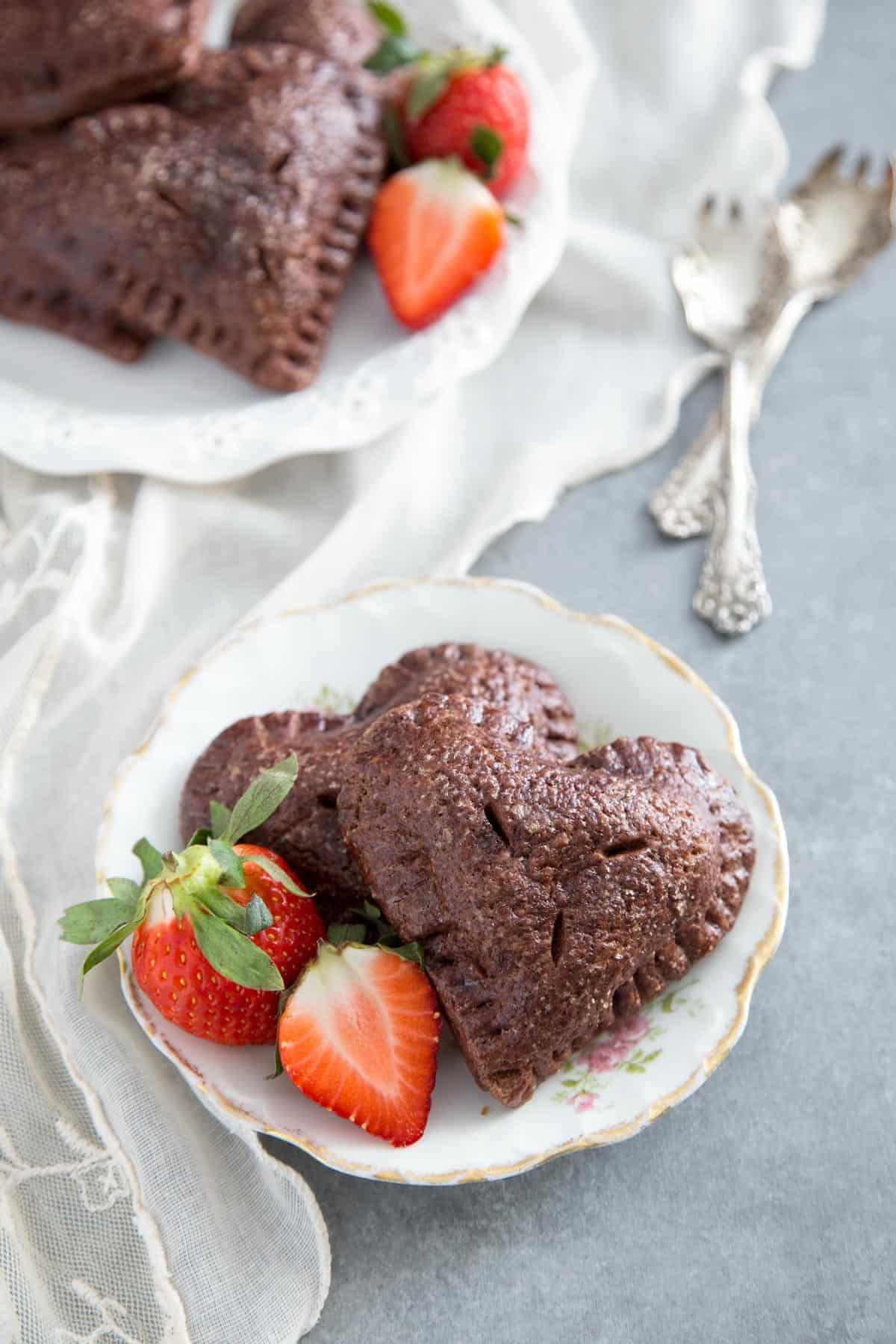
Pie recipes to try with chocolate pie crust
Hungry for more?
Chocolate Pie Crust
Equipment
- Pie Dish
Ingredients
- 1 ¼ cup all-purpose flour, 165 g
- ¼ cup cocoa powder, 22 g
- ¼ cup granulated sugar, 50 g
- ¼ rounded teaspoon kosher salt, 2 g
- 5 ounce unsalted butter, cold & cubed, 142 g
- 4 – 6 tablespoon cold water
Instructions
Make the pie dough
- Add flour, cocoa powder, sugar and salt in a mixing bowl and mix thoroughly with a whisk. Transfer flour mixture to a food processor fitted with the dough blade, or a stand mixer fitted with the paddle attachment or simply leave it in the bowl if making pie dough by hand.
Using Food Processor
- Add cubed cold butter to the flour mixture. Pulse the food processor several times until butter is about pea and bean size. Variations in size are okay.
- Turn the food processor to “on” position and drizzle cold water over the dough mixture through the water hole, as soon as the dough starts to pull together turn the food processor off. You may need to stop the food processor in between and get a spatula to mix up the flour at the bottom.
- Turn the dough out on the counter or cutting board lined with a piece of plastic wrap, and shape into a disk. Wrap well and rest in the refrigerator for at least an hour.
Using Stand Mixer
- Add cubed cold butter to the flour mixture. Turn the stand mixer on low to beat the butter into the flour. You will see the butter pieces flatten and get smaller. Variations in size are okay.
- Once the butter pieces are no longer in their original cube shape, drizzle cold water over the dough mixture while the mixer keeps going on low speed. Stop the mixer once you see larger clumps of dough start to pull together.
- Turn the dough out on the counter or cutting board lined with a piece of plastic wrap, and shape into a disk. Wrap well and rest in the refrigerator for at least an hour.
By Hand
- Add cubed cold butter to the flour mixture. Use a pastry blender to cut the butter into the flour mixture or pinch it together with your fingers until none of the butter pieces are larger than pea or lima bean size.
- Drizzle cold water over the dough mixture and mix with a spatula. Grab a chunk of dough and press it in your hand, if the dough holds it is done. You may need up to 6 tablespoons of cold water to get the dough to clump together in this method.
- Form a ball in the bowl, place it on a piece of square plastic wrap and flatten into a disk. Wrap well and rest in the refrigerator for at least an hour.
- At this point, you can use the dough as you please for a single crust pie, hand pies, tart, etc. Continue on with the following steps to prepare and par-bake the pie crust to use in recipes with a custard type filling.
Shaping and par-baking/blind-baking
- Take the disk of pie dough out of the fridge and roll into a circle about 2” larger than your pie dish. Use extra cocoa powder/flour to keep the dough from sticking to the counter and roller. You could also roll out the dough on a piece of parchment paper.
- Carefully place the dough over the pie dish, lightly press the dough into the bottom and side of the pie dish, let the excess dough hang over the side.
- Trim some of the excess dough if necessary to create an even edge, leaving just enough to fold under and create a fluted edge.
- Cover the pie dish with plastic wrap and keep refrigerated or freeze for 15 – 30 minutes.
- Once the pie dough has frozen solid, preheat the oven to 425°F.
- Dock the bottom of the pie dough and on the sides using a fork.
- Place a large piece of parchment paper over the frozen pie dough, place pie weights on top or pour dry beans on top to fill the whole pie crust. Make sure the parchment is large enough to cover the edges of the crust entirely.
- Bake pie crust for 25 minutes with pie weights or beans.
- At this point you can remove pie weights and parchment paper.
- Fill the pie crust with whatever filling you’re using and continue baking according to that particular recipe instructions.
- Or continue baking the crust to completion, an additional 5 – 10 minutes, to be used in pie recipes that don’t require further baking of the filling, such as cream pie.
- Remove from the oven and let cool on a wire rack.
Notes
- The amount of water you’ll need may vary between 4 – 6 tablespoons depending on the type of flour you use or even the weather. Too little water and the pie dough will be too dry, and won’t stick together. Too much water and the pie dough will be too wet and sticky. Drizzle just enough water to form clumps of dough that stick together.
- You can use instant coffee or instant espresso to enhance chocolate flavor, dissolve the granule in 1 tablespoon of cold water.
- When par-baking, make sure the parchment paper is large enough to cover the entire crust including the edges so the edge doesn’t burn.
- Once par-baking is complete and the parchment paper is removed, make sure to use a pie shield to cover the pie edge so it doesn’t burn.
Nutrition
Nutrition information is automatically calculated, so should only be used as an approximation.
 Like this recipe? Rate & comment below!
This post may contain affiliate links. For more details on how we utilize affiliates, ads, and sponsored content, see our full disclosure policy. Thank you for your continued support, which enables us to keep bringing you delicious recipes, at no extra cost to you.




I enjoy the crust. I used it with a butterfinger cream pie. It is very delicious. Thank you.
Thank you, Kasha! Butterfinger cream pie sounds amazing and so perfect for a chocolate crust.
For making individual pie shells to be filled with pumpkin pie filling, do I chill, dock and put small parchment paper lining and beans in each? The filling requires baking.
I’m not sure about 425 degrees for par baking cup cake pan pie shells for 13 min. Filling and continuing to bake with the filling another 20?? Should I use a lower oven temp?
Thanks for your help!!
Hi Lisa, yes I would do exactly the same steps, chill, dock, add small lining paper with bean inside. Where did you get the timing of 13 mins and 20 mins? Is it from your pumpkin pie recipe? I haven’t done this myself but I would probably reduce temp to 400F for par baking and time to maybe 10 mins. Once you take it out, check to make sure that the crust has cooked and dry out a bit, if it needs more time, pop it back into the oven for a min or two. After you fill with pumpkin pie filling, you would bake until the filling is set, this has to be done according to your pumpkin pie filling recipe. I can’t tell you whether that would be 10 mins or 20 mins since I haven’t baked little mini pumpkin pies in a cup before but I would check at 10 mins and keep going if it needs more, pumpkin pie filling should still jiggle slightly in the center.
Mine came out sticky, do you know why?
Too much water most likely. If the weather is really humid you might need to hold back some water. Try refrigerating and let it set up before rolling out, you should be able to save it.
I made this recipe and put it in cupcake pans for mini pies. I precooked it for 13 minutes on 350 Turing them 1/2 way through. They were amazing with my German Chocolate pie filling.
Isn’t this recipe for one crust or two? Haven to rolled it out yet look so a little lean for two crusts ?!
1 crust, if you want to make a double-crust pie, double the recipe. I like to make my pie crust 1 at a time, it comes together quicker and you don’t have to eyeball when you divide the dough.
I made the dough, but there are no cooking instructions. I don’t know how long to look it or how high the temperature has to be.